The Complete Guide to Metal Stringer Staircases in the GTA (2026)
Everything you need to know about metal stringer staircases — structure, materials, cost, building code and what to expect from the installation process in Brampton and the GTA.
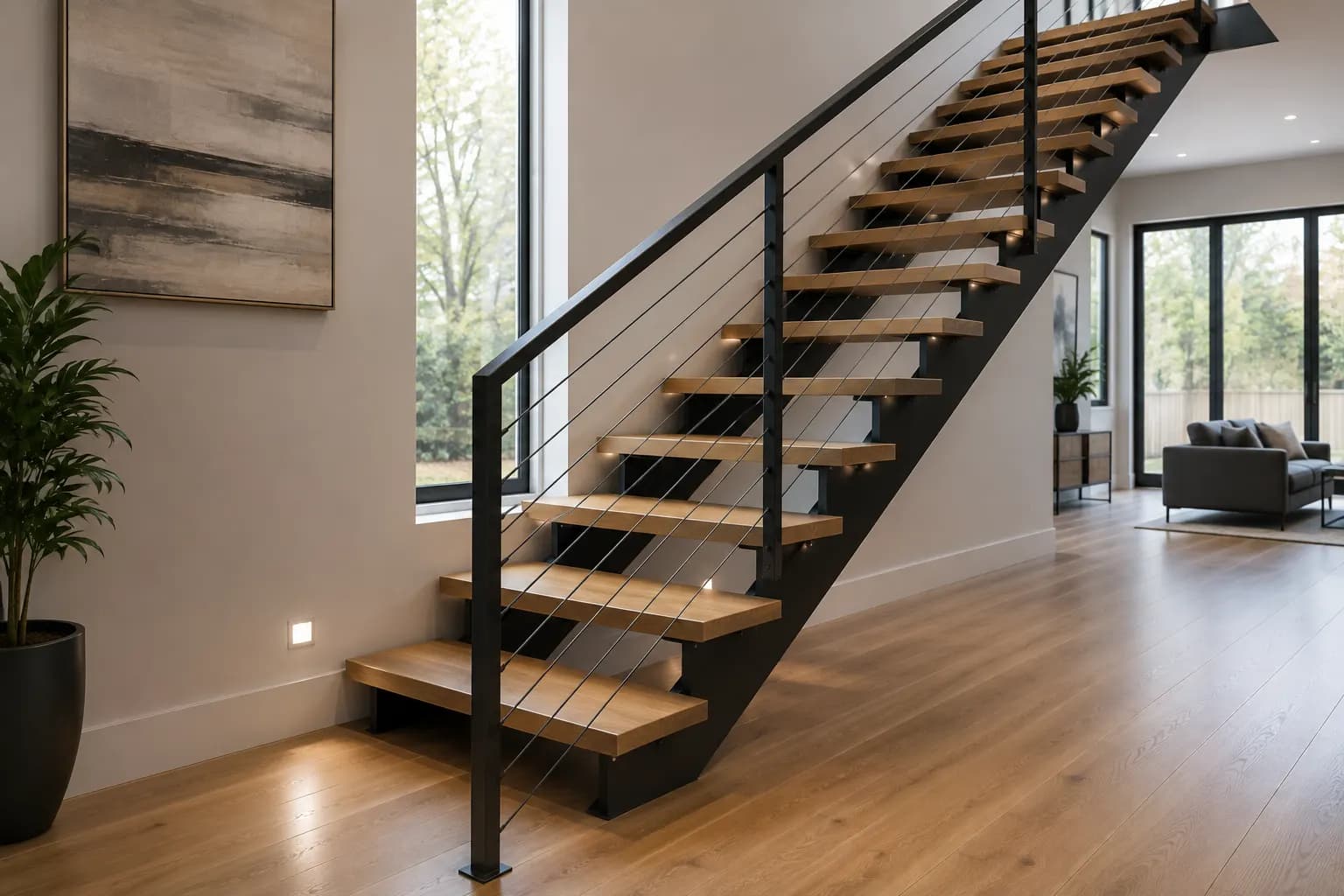
Metal stringer staircases — where a pair of steel beams carry the treads with nothing else visible underneath — have become the defining statement of contemporary residential design. But the engineering behind them is more nuanced than the minimal aesthetic suggests, and understanding it will help you have a far more productive conversation with any installer you speak to.
How Metal Stringer Staircases Are Engineered
The key structural consideration is deflection. A stringer must be stiff enough that the staircase does not bounce or flex under load — a common complaint on cheaper installations that under-engineer the steel section. At RiseOnStairs, we design our stringers with a minimum depth-to-span ratio of 1:20, and we always engineer for dynamic loads (people walking, running, moving furniture) rather than just static weight. Every staircase we install is engineered to meet or exceed Ontario Building Code requirements, with structural calculations provided as part of the quote, not billed separately afterward.
Finish Options for Metal Stringers
Finish options have expanded dramatically in recent years. Powder coating gives you any RAL colour with excellent chip resistance and is the most durable option for high-traffic homes. Raw steel with a clear lacquer gives an industrial warmth that gets better with age, developing subtle patina over years of use. Sandblasted hot-rolled steel, sealed with a penetrating oil, is currently our most requested finish — it has the tactile, matte character clients want from an industrial-influenced interior without the maintenance of raw steel.
Choosing a Tread Material
The tread material you pair with your stringer changes the entire character of the piece:
- Solid oak or walnut treads give warmth and tradition against an otherwise minimal steel frame
- Glass treads (toughened, 12-19mm) make the whole structure appear to float, maximizing light through the stairwell
- Concrete treads work beautifully in raw, industrial-influenced interiors and pair naturally with polished concrete flooring
- Steel grating or perforated steel treads suit exterior or loft-style interior applications
Metal Stringer Styles We Build
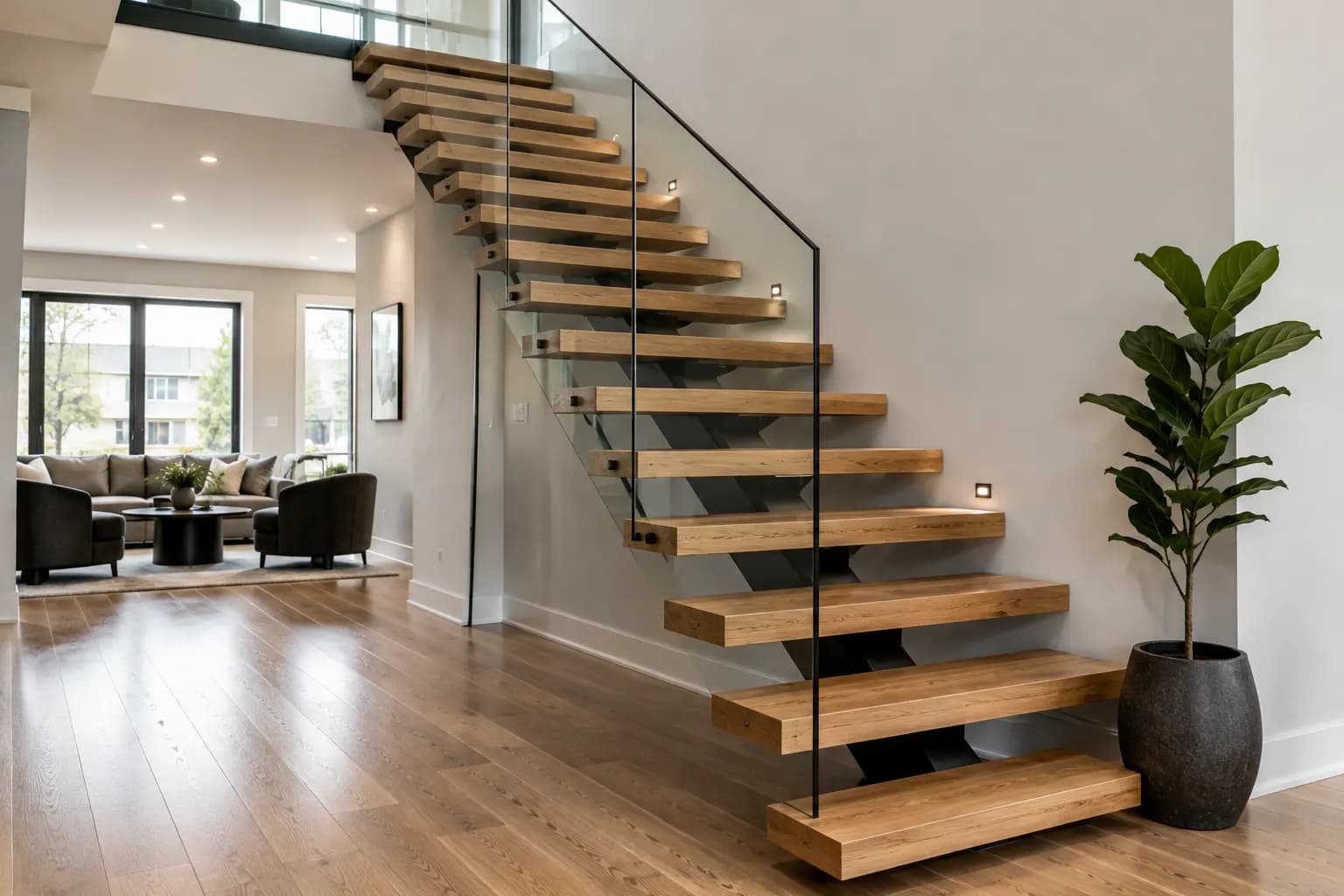
Not every metal stringer staircase looks the same — straight floating flights, mono-stringer cantilevered designs, quarter-turn and half-turn layouts, and full helical staircases are all possible depending on your stairwell. Browse our full range of metal stringer styles to see what's possible for your space, or read on for the engineering and material decisions that matter most once you've picked a style.
Metal Stringer Staircases in Brampton and the GTA
RiseOnStairs has installed metal stringer staircases throughout Brampton, Toronto, Mississauga, Oakville, Vaughan and Etobicoke. Each one is engineered to meet Ontario Building Code requirements and fabricated in our own workshop — no outsourcing, no shortcuts. Because the steel is cut, bent and welded in-house, we can hold tighter tolerances and shorter lead times than installers who outsource fabrication to a third-party metal shop.
Cost and Timeline
Fabrication typically takes 4-6 weeks from approved drawings, followed by 3-7 days of on-site installation depending on complexity. Pricing depends heavily on configuration, tread material and finish — see our metal stringer stairs page for current GTA pricing by style. We provide fixed-price written quotes after every consultation — no vague estimates that change once work begins.
Metal Stringer or Wooden Stringer?
If you are still deciding between a metal and a wooden staircase, our metal vs wood staircase comparison walks through the cost, maintenance and style trade-offs in detail. For a broader look at the full staircase renovation process, see our complete staircase renovation guide for the GTA.
Contact RiseOnStairs for a free in-home consultation and quote anywhere in the GTA. We will bring finish samples and discuss the structural options that suit your specific stairwell.
Working With Architects and Designers
We regularly collaborate directly with architects and interior designers on custom metal stringer projects, producing shop drawings from architectural plans and advising early on structural feasibility before a design is finalized. If you are working with a design professional, we are happy to be brought in during the design phase rather than only at construction — early input on stringer depth, landing placement and tread material often prevents costly redesigns later.
Common Mistakes to Avoid
The most common mistake we see in poorly executed metal stringer staircases is under-engineered steel — a stringer sized to look slim rather than sized to the actual load path, which results in noticeable bounce underfoot. The second is inconsistent weld quality, which is both a safety issue and a visible cosmetic flaw on an otherwise minimal design where every line is exposed. The third is skipping structural sign-off entirely, which can create real problems at resale or if a home insurance claim ever requires proof of code-compliant construction. We provide full structural documentation with every installation for exactly this reason.
Maintaining Your Metal Stringer Staircase
Properly finished steel requires very little upkeep. Powder-coated stringers should be wiped down periodically with a mild cleaner — avoid abrasive pads, which can scratch the coating. Raw steel finishes with a clear lacquer will develop a natural patina over years, which most clients consider a feature rather than a flaw; if you want to slow this process, an occasional reapplication of the lacquer coat is all that's required. Any bolted connections (tread-to-stringer fixings, balustrade posts) should be checked periodically, though a properly installed connection should not require re-tightening for many years.
Frequently Asked Questions
How is a metal stringer staircase different to install versus a wooden one? Steel fabrication happens entirely off-site in our workshop, so on-site work is primarily positioning, fixing and finishing — this is why installation windows are often similar in length to wooden staircases despite the additional structural complexity.
Can an existing wooden staircase be converted to metal stringer? In most cases, yes, though this typically requires removing the structure down to the floor framing rather than a simple refurbishment — we assess this during a site visit.
Do metal stringer staircases cost more to insure? No — a properly engineered and code-compliant staircase, whether metal or wood, does not typically affect home insurance premiums.
Ready to begin?
Let's bring your vision to life
Our team of master craftsmen is ready to help you design the perfect staircase or flooring for your home.