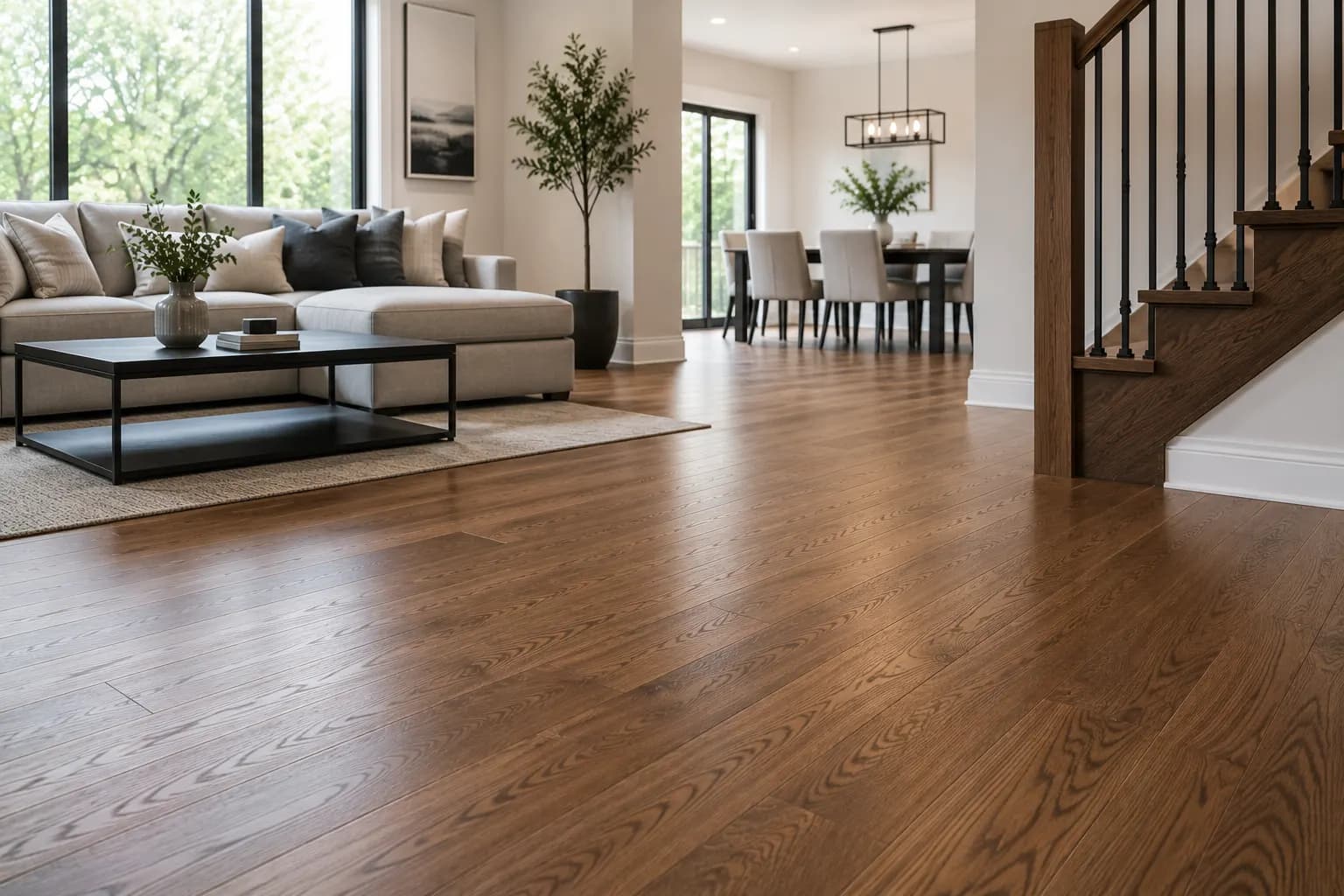
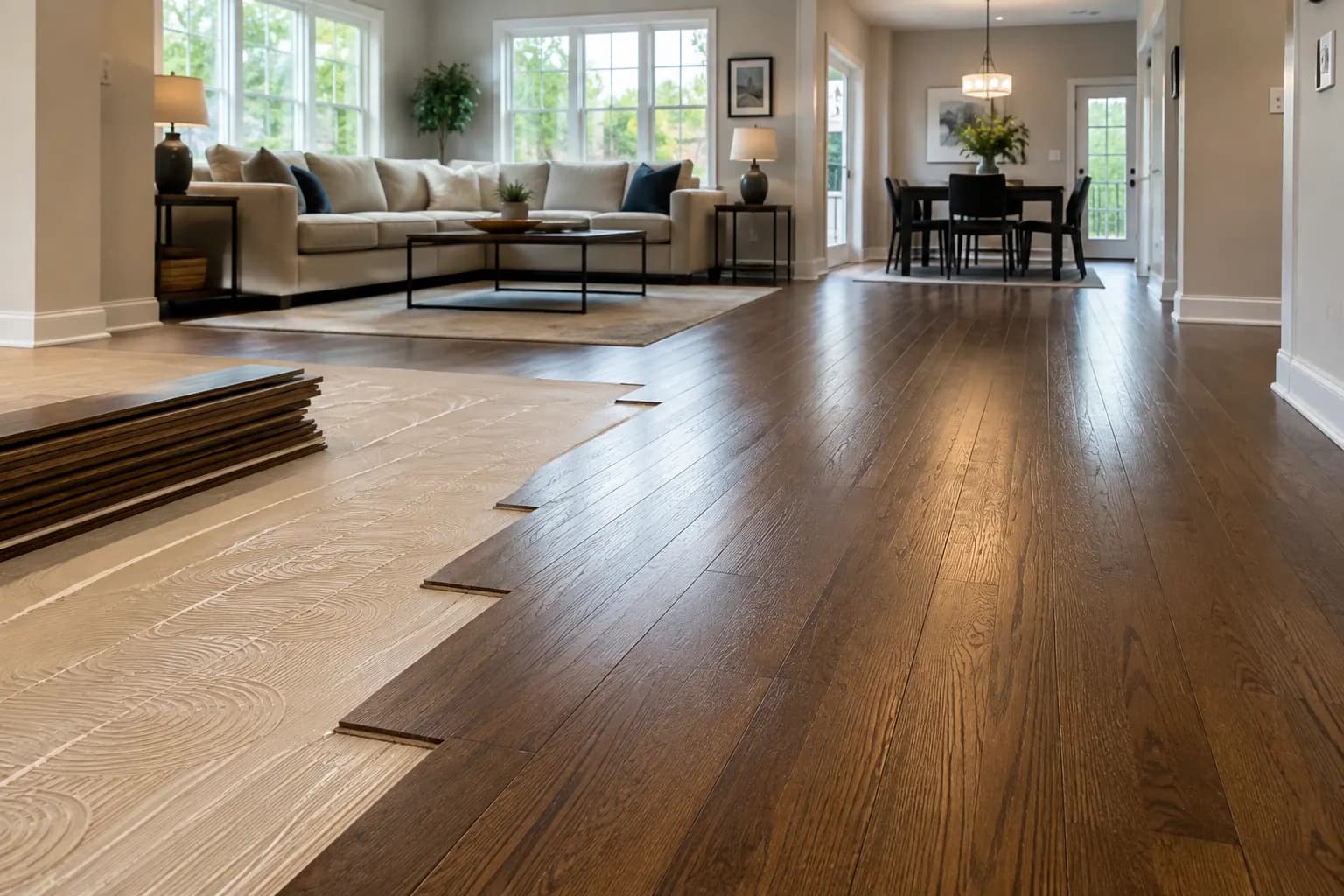
Solid vs Engineered Hardwood for GTA Homes: Climate & Subfloor Guide
Solid or engineered hardwood? In the GTA's climate, the right answer depends heavily on your subfloor, heating system, and where in your home you're installing.
The solid-versus-engineered decision is the single most consequential choice in any hardwood flooring project — and in the GTA specifically, climate and subfloor conditions make the right answer less obvious than many homeowners expect.
The Core Difference: Construction, Not Quality
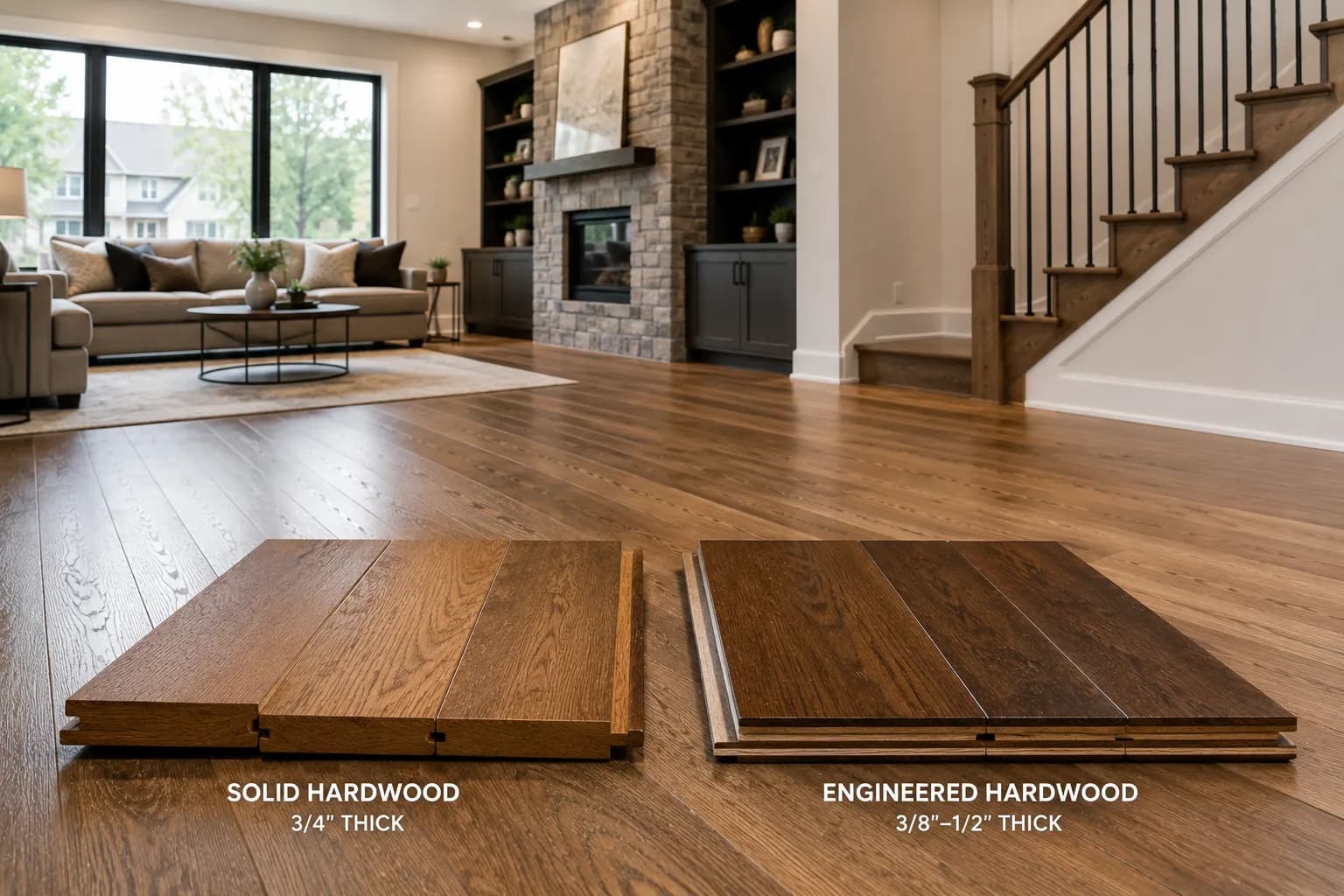
Solid hardwood is exactly what it sounds like — a single piece of wood, typically 3/4-inch thick, milled with a tongue-and-groove profile. Engineered hardwood has a real wood veneer (typically 2-6mm) bonded over a multi-layer plywood core, with the grain direction of each layer running perpendicular to the one below it. This is not a "real wood vs fake wood" distinction — quality engineered hardwood is 100% real hardwood on its wear surface. The difference is entirely in how the layers are structured, and that structural difference changes how each product responds to humidity.
How GTA Humidity Swings Affect Each Type
Solid wood expands and contracts primarily across the width of the board as humidity rises and falls seasonally — a real factor in a climate like the GTA's, where summer humidity can exceed 70% and winter forced-air heat can drop indoor humidity below 25%. Engineered hardwood's cross-ply plywood core resists this movement far more effectively, since each layer's grain direction counteracts the expansion of the layer above and below it. This is why engineered construction is the safer default for wide-plank installations (5-7 inch boards), which move more with humidity regardless of species.
Subfloor Considerations: Concrete Slabs and Radiant Heat
Below-grade installations — finished basements built over a concrete slab — should almost always use engineered hardwood, since solid wood is highly susceptible to moisture wicking up through concrete over time. Homes with radiant in-floor heating face a similar constraint: the subfloor runs consistently warmer and drier than a standard joist floor, and solid hardwood's greater movement makes it a poor match for this environment. Engineered hardwood with a manufacturer rating explicitly approved for radiant heat is the appropriate choice, with subfloor temperature typically limited to a manufacturer-specified maximum to protect the finish and the wood itself.
Above-grade installations over a standard joist subfloor, with no radiant heating, are the one scenario where solid hardwood remains a straightforward, excellent choice — and where its longer refinishing lifespan (four to six sandings versus a more limited number for engineered, depending on veneer thickness) becomes a genuine long-term advantage.
Refinishing: How Many Times Can You Sand?
Solid hardwood at 3/4-inch thickness can typically be sanded and refinished four to six times over its lifetime, supporting a usable life well beyond 50 years with proper care. Engineered hardwood's refinishing capacity depends entirely on veneer thickness — a 2mm veneer may support only one light screen-and-recoat, while a 4-6mm veneer can typically be sanded two to three times, comparable to a reasonable fraction of solid wood's lifespan. If long-term refinishing flexibility matters to you and your subfloor allows it, this is a meaningful factor in the decision.
Our Recommendation by Home Type
For a standard above-grade main floor with forced-air heat and no radiant system: solid hardwood is an excellent, traditional choice, particularly in narrower plank widths. For any basement or below-grade installation: engineered hardwood is the appropriate choice, full stop. For homes with radiant in-floor heating on any level: engineered hardwood rated for radiant use. For wide-plank installations (5 inch or wider) anywhere in the home: engineered construction is the safer default given the GTA's humidity range, regardless of floor level or heating system.
For species selection within either construction type, see our wood species guide, and for current pricing across both solid and engineered options, our complete flooring cost guide.
A Quick Decision Checklist
- Below-grade (basement) installation → engineered, always
- Radiant in-floor heating on any level → engineered, rated for radiant use
- Wide-plank (5 inch+) anywhere in the home → engineered preferred
- Standard joist subfloor, above-grade, no radiant heat, narrow-to-mid plank width → solid hardwood is an excellent, traditional choice
- Uncertain about your subfloor or heating setup → book an in-home assessment before committing to either
Contact RiseOnStairs for a free in-home assessment. We'll evaluate your specific subfloor, heating system and humidity conditions before recommending a construction type — not the other way around. Visit our hardwood flooring page to see the full range we install.
Ready to begin?
Let's bring your vision to life
Our team of master craftsmen is ready to help you design the perfect staircase or flooring for your home.