Best Wood for Stairs: Oak vs Walnut vs Ash for GTA Homes
Oak, Walnut or Ash? The right staircase wood depends on how you live, your interior style, and your GTA home's conditions. Here is how our team helps clients decide.
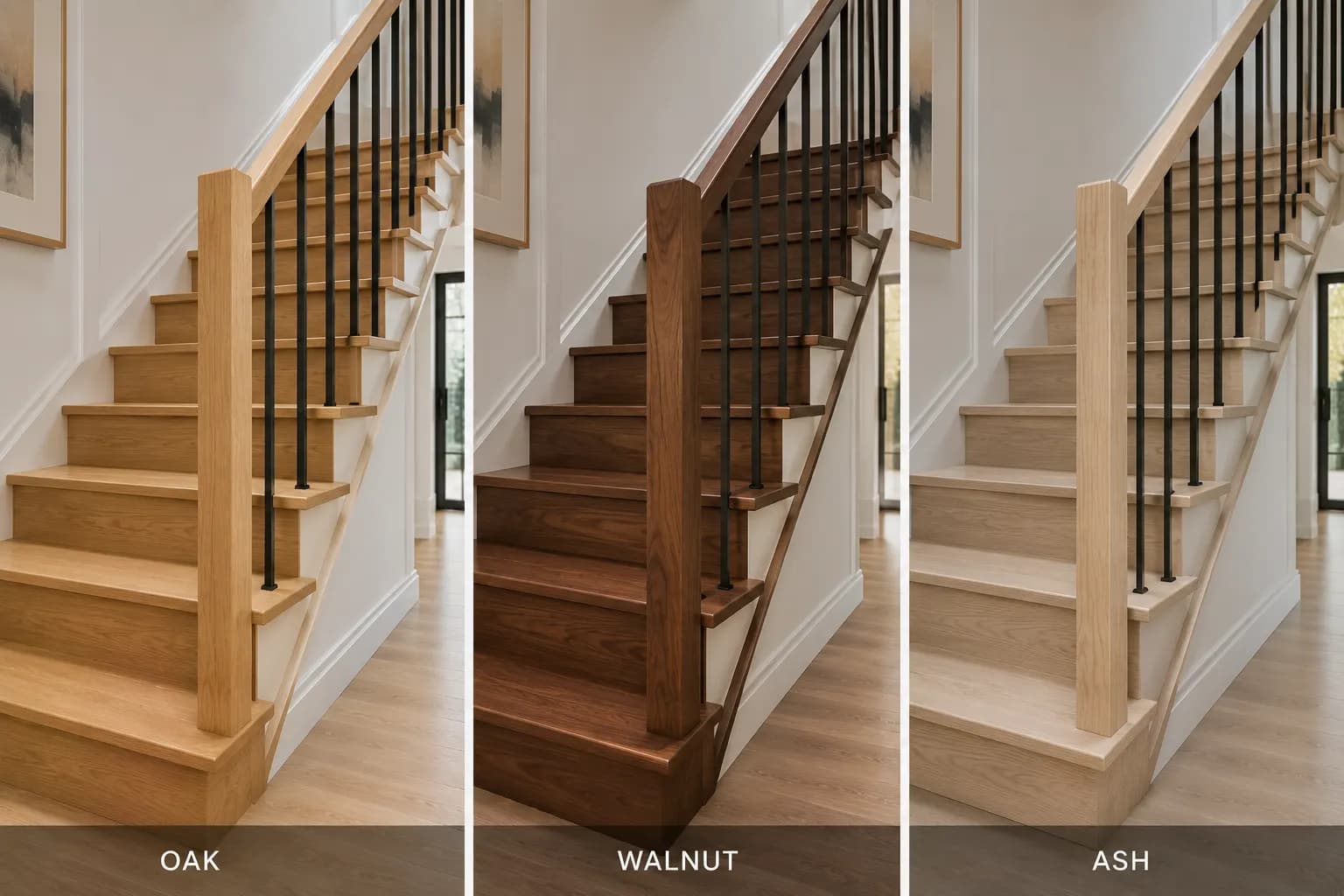
When clients come to us at RiseOnStairs, one of the very first questions we ask is: how do you live in your home? A family with young children has very different needs from a design-conscious couple who entertain frequently. The wood species you choose defines not just the look of your staircase but its longevity, maintenance needs, and how it ages over the next twenty years.
Oak: The Workhorse of the Staircase World
White Oak is our most popular choice — and for good reason. European White Oak offers a consistent grain, excellent hardness (1360 on the Janka scale), and takes stain beautifully. It handles Ontario's humidity swings better than softer species, resists dents from everyday foot traffic, and suits everything from traditional to contemporary interiors. Red Oak is a slightly warmer, more affordable alternative with a more prominent grain pattern, though it is marginally softer at 1290 on the Janka scale.
Walnut: Character at a Cost
Black Walnut sits at the opposite end of the character spectrum. Its rich chocolate tones and wild, flowing grain are genuinely show-stopping — no two staircases look quite the same. But at only 1010 on the Janka scale, it is noticeably softer than Oak and will mark more easily under heavy traffic. We recommend it for lower-traffic statement staircases, primary suites, or homes where the staircase is more architectural feature than daily thoroughfare.
Ash: The Overlooked Alternative
Ash is the underrated hero of our workshop. It has the highest hardness of the three species (1320 on the Janka scale, close to Oak), a dramatic open grain, and responds beautifully to both natural oils and contemporary lacquers. If you want the durability of Oak with a slightly more distinctive, contemporary grain pattern at a comparable price point, Ash deserves serious consideration — most homeowners we meet have simply never had it suggested to them.
Comparing Hardness, Cost and Maintenance
- White Oak — Janka 1360, mid-range cost, low maintenance, suits nearly any interior style
- Red Oak — Janka 1290, most affordable of the three, warmer tone, slightly more visible grain
- Black Walnut — Janka 1010, premium cost, highest maintenance, best for lower-traffic feature staircases
- Ash — Janka 1320, mid-to-premium cost, low maintenance, contemporary open grain
How Climate Affects Your Choice in the GTA
Ontario's seasonal humidity swing — dry, forced-air winters and humid summers — causes all wood to expand and contract to some degree. Harder, more dimensionally stable species like Oak and Ash tolerate this movement better than softer woods like Walnut, which is one reason we default to Oak or Ash for main staircases and reserve Walnut for lower-humidity-exposure areas of the home, away from exterior doors and large window walls.
Matching Wood to Your Interior Style
For a traditional or transitional home, White Oak or Red Oak in a warm stain reads as timeless without feeling dated. For a modern, minimalist interior, White Oak with a wire-brushed texture and a matte water-based finish, or Ash left closer to its natural tone, both suit clean-lined, contemporary spaces. For a bold architectural statement — often paired with a metal stringer structure — Walnut treads against a black steel frame is one of the most requested combinations we build.
Which Wood Should You Choose for Your GTA Home?
For most Brampton and Toronto homeowners, White Oak is the right starting point. It handles Ontario's humidity swings better than Walnut, is comparable in hardness to Ash, and suits everything from traditional to contemporary interiors. If you are building a modern open-plan home and want drama, Walnut is worth the premium for a feature staircase. If you want the durability of Oak with a more distinctive grain at a similar price point, Ash is an underrated alternative that deserves more attention.
Finish Options for Each Species
Each species takes finish differently, and the right choice affects both appearance and long-term durability. Oak and Ash both accept stain evenly thanks to their open, consistent grain — a matte water-based lacquer is our most requested finish for both, since it resists yellowing and cures faster than oil-based alternatives. Walnut is best finished with a natural oil or clear lacquer that lets its natural colour variation speak for itself; heavy staining tends to muddy the very grain pattern that makes Walnut worth choosing in the first place.
Sourcing and Sustainability
All three species we carry are sourced from FSC-certified North American forests wherever possible, and we hold stock at our Brampton workshop rather than ordering per-project, which shortens lead times and lets you see and handle real material — not a supplier's marketing sample — before committing. Sustainably harvested hardwood is also simply a better long-term material choice: a well-maintained solid wood staircase will outlast most other structural finishes in a home by decades.
A Note on Cost Differences
As a general guide, Red Oak sits at the most accessible end of the three, White Oak runs a modest premium above it for its more consistent, refined grain, Ash lands in a similar range to White Oak, and Black Walnut carries the highest premium of the group — often 30-50% above Oak — reflecting both the tree's slower growth and higher demand. Exact pricing depends on the scope of your project; see our complete staircase cost guide for current per-project ranges.
Frequently Asked Questions
Can I mix wood species between my staircase and my flooring? Yes — many of our clients choose a harder-wearing species like Oak for their hardwood flooring and a feature species like Walnut for the staircase itself, since the staircase sees comparatively less direct foot traffic than a hallway floor.
Do these species work with both wooden stringer and metal stringer staircases? Yes. All three species pair well with wooden stringer construction for a fully traditional look, or as floating treads on a metal stringer frame for a more contemporary result.
How much does wood species affect the total project cost? Species is one of the primary cost levers on any staircase project — see our complete staircase renovation cost guide for a full breakdown by species and stair type.
RiseOnStairs carries all three species in stock at our Brampton workshop. We bring samples to every in-home consultation so you can see and feel the material in your own light before making a decision. Contact us for a free consultation across Brampton, Mississauga, Toronto and the wider GTA.
Ready to begin?
Let's bring your vision to life
Our team of master craftsmen is ready to help you design the perfect staircase or flooring for your home.