7 Hardwood Flooring Maintenance Tips From Our GTA Installation Team
After 1,200+ hardwood floor installations across Brampton, Toronto and the GTA, here is what our team has learned about keeping hardwood floors looking great for decades.
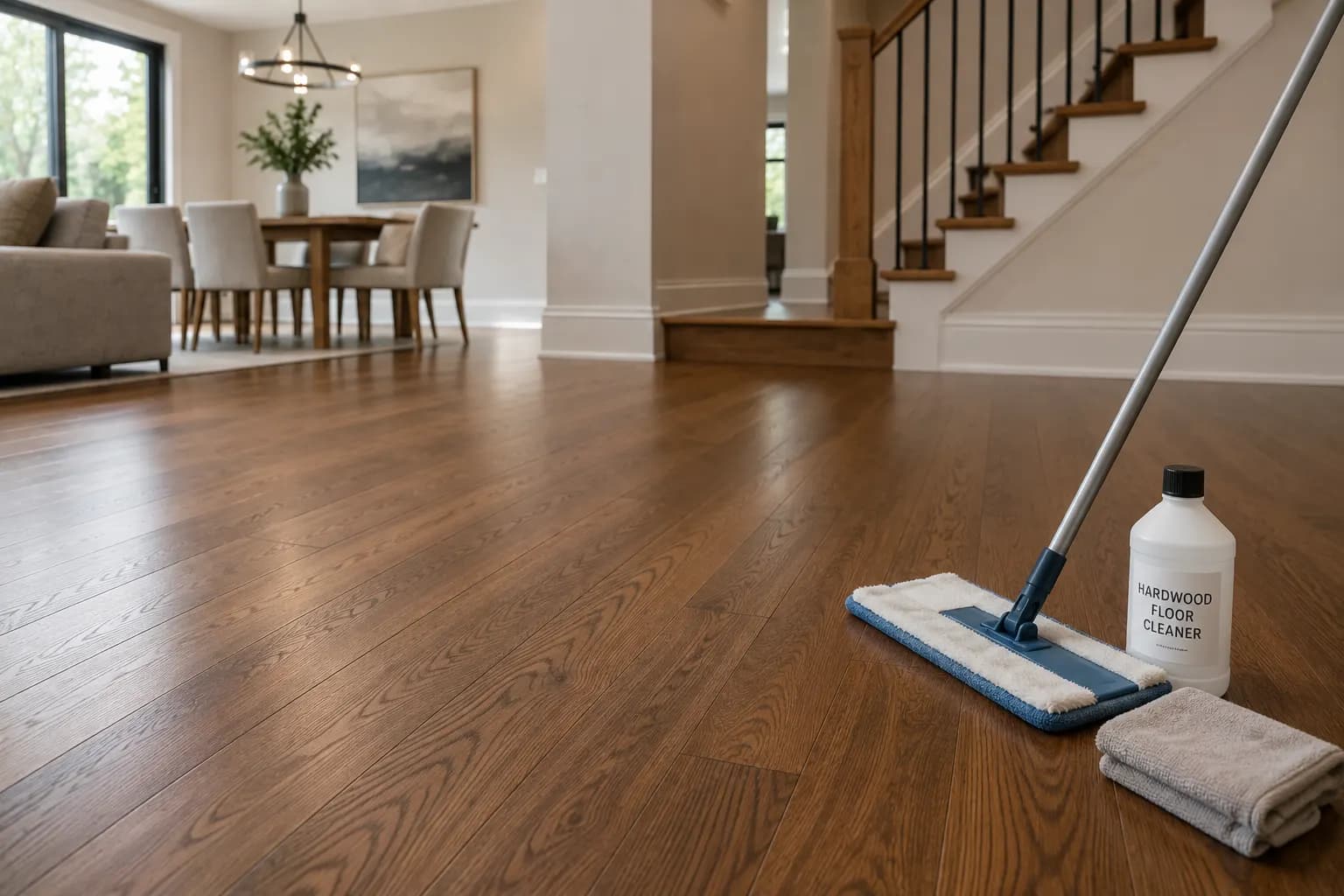
After installing over 1,200 hardwood floors across Brampton, Toronto, Mississauga and the GTA, we have seen everything — and learned a great deal about what separates floors that look beautiful after twenty years from those that need refinishing after five. These seven habits are the ones we repeat most often to clients at the end of every installation.
- Never wet-mop a hardwood floor. Hardwood and standing water are enemies — moisture that sits on the surface will find its way into seams and raise the grain over time. Use a damp, well-wrung mop only for occasional deep cleans, and a dry microfibre mop or vacuum with a hardwood-safe attachment for daily maintenance.
- Control your humidity. Wood is hygroscopic — it expands when humid and contracts when dry. Keep your home between 35-55% relative humidity year-round and you eliminate the majority of gapping and cupping problems we see called in for repair.
- Use felt pads under every piece of furniture. Every one — not just the heavy pieces. The scratches on hardwood almost always come from furniture being dragged or shifted, not foot traffic, and felt pads wear out and need periodic replacement.
- Place proper entrance mats at every exterior door. The grit tracked in from outside is the most abrasive thing that will ever touch your floor. A quality exterior mat with a scraping texture removes the majority of it before it gets inside.
- Refinish before you think you need to. A light screen-and-recoat when you first start seeing wear in traffic areas costs a fraction of a full sand-and-refinish later. Proactive maintenance is always cheaper than reactive repair.
- Address spills immediately. Wood can tolerate brief moisture contact but not prolonged contact. A spill left for an hour is a potential stain; a spill left for a day can cause permanent raised grain that no amount of refinishing fully corrects.
- Keep pet nails trimmed. We love dogs, but their nails are the second most common cause of floor scratches after furniture, particularly on softer species like Walnut.
Why Ontario's Climate Is Uniquely Hard on Hardwood
Ontario's climate is particularly demanding on hardwood floors. The swing between summer humidity and dry winter air — especially in newer, more airtight homes with forced-air heating — is the number one cause of gapping, cupping and squeaking we see in Brampton and Toronto homes. Homes with in-floor radiant heat see an additional layer of stress, since the subfloor itself runs warmer and drier than a standard joist floor, which is one reason engineered hardwood is often the better choice over radiant heat rather than solid wood.
When to Refinish vs Replace
Most solid hardwood floors can be sanded and refinished four to six times over their lifetime before the wear layer is too thin to sand safely. If your floor still has at least 1/8 inch of wood above the tongue-and-groove joint, refinishing is almost always the right call. If boards are cupped severely, have widespread water damage, or the wear layer (on an engineered floor) has already been sanded to its limit, replacement is the more honest recommendation — and one we will always give you plainly rather than sell an unnecessary refinish.
Keeping Your GTA Hardwood Floor Looking Great
Our strongest recommendation: invest in a whole-home humidifier if you have a forced-air heating system. Keeping your home between 35-55% relative humidity year-round will extend the life of your hardwood floor by decades and prevent the large majority of the problems we are called in to fix. Pair that with the seven habits above, and a quality hardwood flooring installation should still look excellent twenty years from now.
If your hardwood floor in Brampton, Toronto or anywhere across the GTA needs refinishing, repair or a full replacement, contact RiseOnStairs for a free assessment. For a full breakdown of flooring costs across the region, see our hardwood flooring cost guide.
Choosing Cleaning Products Wisely
Seasonal Maintenance Checklist
Spring: check for any winter humidity damage (cupping) once heating season ends and humidity naturally rises; this is also the best time to schedule a screen-and-recoat if traffic areas are starting to show wear. Summer: run air conditioning consistently to avoid excess humidity, especially in homes without a dedicated humidifier/dehumidifier system. Fall: this is the ideal season to book any refinishing work, since moderate humidity gives the finish the best curing conditions. Winter: run a whole-home humidifier to counteract dry forced-air heat, and watch for any early gapping between boards as an early warning sign.
Signs You Need Professional Help
Persistent gapping that doesn't close up seasonally, cupping (board edges higher than centres) that doesn't flatten once humidity normalizes, any soft or spongy spots that may indicate subfloor moisture damage, and finish that has worn through to bare wood in high-traffic areas are all signals it's time for a professional assessment rather than a DIY fix. Left unaddressed, most of these issues get significantly more expensive to correct the longer they're left.
Frequently Asked Questions
How often should I professionally clean my hardwood floors? A professional deep clean once or twice a year is sufficient for most homes if daily/weekly maintenance habits are followed consistently.
Can I use a steam mop on hardwood? No — steam mops force moisture directly into the wood and finish, and are one of the most common causes of premature finish failure we see.
What's the difference between screen-and-recoat and full refinishing? A screen-and-recoat lightly abrades the existing finish and applies a fresh top coat without removing wood, and is appropriate when the wear layer is intact; full refinishing sands down to bare wood and is needed once the existing finish or wear layer is compromised.
Not all "hardwood-safe" cleaners are created equal — many leave a waxy residue that dulls the finish over time or interferes with future recoating. We recommend a pH-neutral cleaner specifically formulated for your finish type (water-based vs oil-based lacquer), applied sparingly with a microfibre pad rather than sprayed liberally and left to sit.
Ready to begin?
Let's bring your vision to life
Our team of master craftsmen is ready to help you design the perfect staircase or flooring for your home.